Home › Commercial Gravel-to-Asphalt Conversions
Precision Asphalt Indianapolis offers commercial gravel to asphalt conversions in Indianapolis, IN to upgrade dusty, muddy lots and drives. We regrade the existing aggregate, improve drainage, and install durable asphalt surfaces that are cleaner, easier to maintain, and more professional for customers and trucks. Transform your gravel lot with our paving team.
Precision Asphalt Indianapolis provides professional commercial gravel to asphalt throughout Indianapolis, IN, Indiana and the surrounding area. Our licensed, insured crew delivers safe, clean, on-time work with a free estimate before anything begins. Call (317) 793-2897 or request your free quote.
Turn Gravel Lots Into Durable Asphalt Surfaces in Indianapolis
If your commercial property still relies on a gravel lot or drive, you already know the headaches: mud, dust, rutting, and high maintenance costs. Precision Asphalt Indianapolis specializes in commercial gravel to asphalt conversions that turn rough, messy areas into clean, professional, easy‑to-maintain pavement.
We focus specifically on the realities of Indianapolis properties. Freeze-thaw cycles, clay-heavy soils, and snow removal all affect how a converted asphalt surface should be designed. Our team evaluates how your lot is actually used: car traffic vs. semi trucks, delivery patterns, dumpster placements, and snowplow routes. Then we design a conversion that will handle those demands instead of installing a “one size fits all” parking lot.
From small business parking lots on the south side to multi-acre industrial yards near I‑465, Precision Asphalt Indianapolis provides tailored, site-specific solutions. You get a smoother surface for customers and employees, less tracking of gravel into buildings, and a more professional look that matches the level of your business.
How Commercial Gravel-to-Asphalt Conversions Work
A successful commercial gravel to asphalt project involves far more than just paving over stone. Precision Asphalt Indianapolis follows a structured process so your new pavement performs for years.
1. Site assessment and design: We start with a walk-through and measurements. We look at drainage patterns, soft spots, existing gravel depth, and how water currently leaves the site. We also discuss traffic volumes, truck routes, and where loading, dumpsters, and drive-thrus are located. This information drives the pavement design, base depth, and asphalt thickness.
2. Grade checks and layout: Using laser levels or GPS equipment, we set target elevations to ensure water drains away from buildings, doors, and loading docks. Many gravel lots have developed random dips over time. We correct these so you do not end up with ponds on your new asphalt.
3. Base correction and strengthening: We evaluate the existing gravel. If it is clean and deep enough, we may regrade and compact it to build your base, then add new stone where needed. If we find muddy, organic, or unstable areas, we undercut them, install compactable aggregate, and in some cases use a geotextile fabric to separate clay soils from the new base.
4. Fine grading and compaction: Once base repairs are complete, we shape the parking lot or drive to the final profile. Then we compact with vibratory rollers to achieve the density needed to support commercial traffic. If heavy trucks are common, we check compaction more frequently and may increase base depth.
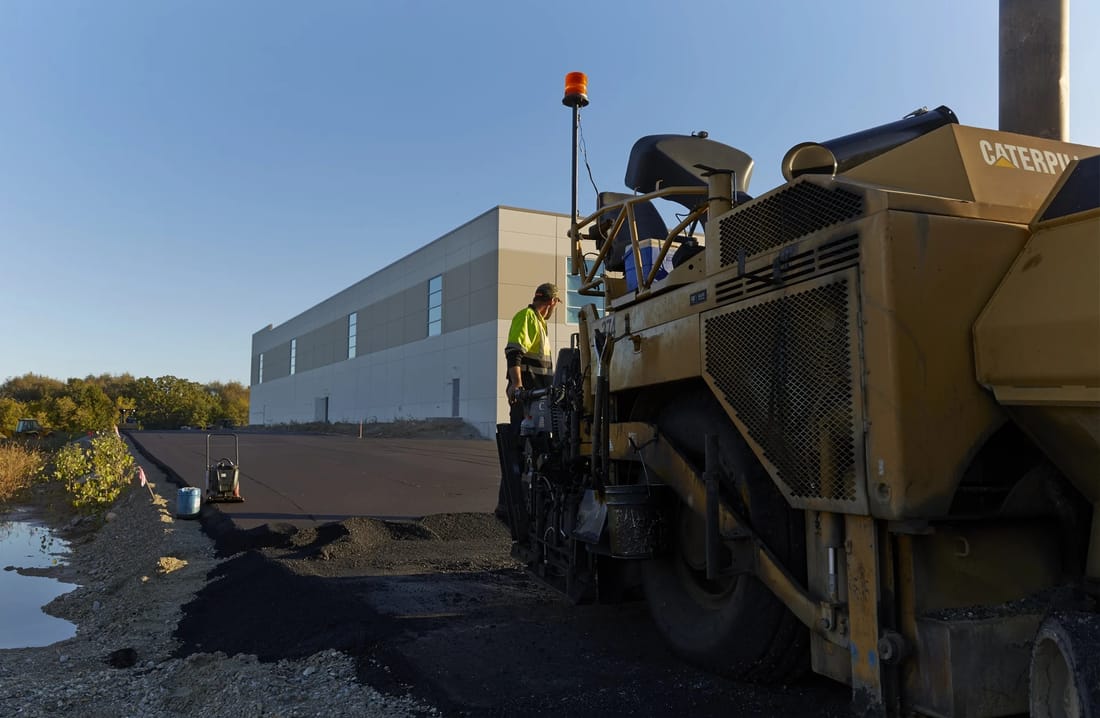
5. Asphalt paving: We typically install a binder course and a surface course for commercial gravel to asphalt projects in Indianapolis. The binder layer is thicker and coarser, which adds strength. The surface layer provides a smooth, sealed driving surface. Each lift is placed with a paver, then compacted while it is still at the proper temperature to lock the mat together.
6. Finishing work: After paving, we saw cut any tie-ins to existing asphalt or concrete, adjust manholes or drains, and clean the surface for striping. Then we paint parking lines, ADA stalls, stop bars, and any directional arrows so the lot is safe and easy to navigate from day one.
What Drives Cost for Commercial Gravel-to-Asphalt Projects
Every property is different, and our goal at Precision Asphalt Indianapolis is to explain clearly why your commercial gravel to asphalt conversion costs what it does.
Existing base quality: If your gravel is thick, well compacted, and relatively clean, we can use more of what you already have, which keeps costs down. If we find large areas of soft, pumping subgrade or many thin spots, we have to remove and replace more material.
Traffic loading: A small office parking lot with cars only can use lighter pavement sections. A distribution facility with semi traffic, dumpsters, and forklifts needs thicker base stone and asphalt, especially in drive lanes and loading zones. We often design “heavy duty” lanes where trucks drive and park, and “standard duty” areas for cars.
Drainage and grading: Lots that already drain reasonably well can often be corrected with modest regrading. Sites with chronic ponding or water that backflows toward buildings may require more extensive grading, additional drains, or swales. That extra earthwork adds time and equipment.
Size and layout complexity: Simple rectangles are more efficient to pave and stripe than irregular shapes with islands, tight corners, or multiple entry drives. Complex layouts require more labor for fine grading, handwork around curbs, and detailed striping.
Site access and operations: Working around active businesses sometimes requires off-hours paving, phasing the project in sections, or temporary traffic control to keep customers and trucks moving. We plan this with you, but if your operations demand a very tight schedule or strict access routes, it can affect total cost.
Seasonal timing: In Indianapolis, paving season typically runs from April to early November, with the most consistent results coming from late spring through early fall. Trying to squeeze in work during cold snaps can require extra effort to manage temperatures. We will be candid if weather conditions risk the pavement quality, and will schedule or stage your project to protect your investment.
Design Options for Converted Asphalt Lots and Drives
Converting from gravel to asphalt is your chance to improve how your property functions, not just how it looks. Precision Asphalt Indianapolis helps you make practical design choices tailored to your site.
Pavement thickness and sections: We design different pavement sections for different uses. For retail plazas or medical offices, we may recommend a standard commercial section with moderate base and asphalt thickness. For manufacturing plants, truck depots, or trash truck routes, we often install thicker binder courses and enhanced base stone in key lanes.
Drainage features: During design, we may add or adjust catch basins, trench drains near loading docks, or surface swales along the edges of the lot. On previously gravel surfaces, water often just disappeared into the stone. Once you have asphalt, it must move across the pavement to defined outlets. Getting this right prevents ice patches and premature cracking.
Layout and traffic flow: Conversions are a natural time to rethink parking and truck circulation. We can reconfigure stalls to meet current codes, add wider drive aisles for delivery trucks, and create dedicated loading or fire lanes. Clear striping, wheel stops where appropriate, and well-placed signage all reduce confusion and fender benders.
Surface mix selection: In central Indiana, we avoid ultra‑smooth mixes in high‑traffic commercial areas because they can polish and get slick. Instead, we typically recommend mixes that balance smooth driving with enough surface texture for grip, especially helpful during wet or icy conditions.
Future maintenance planning: We can design your pavement with future maintenance in mind. For example, installing slightly thicker asphalt in main drive lanes can extend the time before you need mill-and-resurface work. We also discuss where utility companies might trench in the future so you can plan for likely disturbance areas.
Common Problems With Gravel Lots and How We Solve Them
If you have delayed converting your gravel lot to asphalt because of concerns about hidden problems, you are not alone. Precision Asphalt Indianapolis addresses the most common issues we see in Indianapolis commercial gravel to asphalt projects.
Soft, pumping areas: Gravel lots often develop spots that always seem wet and spongy. These usually indicate poor subgrade or trapped water. We locate these areas during our assessment and excavation, then remove the unstable soils and rebuild with compacted aggregate, sometimes with a stabilizing fabric. The goal is to eliminate future sinkholes and alligator cracking in those locations.
Dust and erosion: Gravel lots can create dust clouds in dry weather and washouts during heavy rains. While proper asphalt design fixes most of this, we also pay attention to shoulders and transitions. Adding aggregate shoulders, concrete aprons, or small swales at key points prevents edges from unraveling and minimizes erosion.
Drainage issues after paving: Some owners worry that switching from gravel to asphalt will create new water problems. We proactively examine how water currently flows, then design slopes and drains to replicate or improve that behavior. On flat sites common around warehouses or industrial parks, we often use very slight but consistent cross-slope so water moves steadily instead of sitting.
Tie-in to existing features: Many commercial properties have a mix of surfaces, including concrete docks, sidewalks, or existing asphalt drives. Abrupt transitions can create trip hazards or weak spots. We carefully mill or cut at tie-in points so the new asphalt meets flush, and adjust manholes or inlets so they sit at the correct elevation.
Keeping your business open: A major concern during any conversion is disruption. We can phase work so a portion of the lot remains usable, schedule the most impactful steps during evenings or weekends, and create temporary gravel or asphalt access routes if necessary. The plan is discussed and agreed on before we start so you know exactly what to expect.
What Indianapolis Property Owners Should Know Before Hiring
Choosing the right contractor for a commercial gravel to asphalt conversion in Indianapolis involves more than comparing prices. You are selecting a partner that will shape how your property functions for a decade or more.
Check experience with conversions, not just paving: Gravel-to-asphalt work is different from paving on new construction. Ask contractors how they evaluate existing gravel bases, what they do when they hit bad subgrade, and whether they can explain, in writing, the base and asphalt thickness they propose for your traffic loads.
Ask about drainage strategy: Any reputable contractor should be able to show you the intended slopes on a sketch or on site with grade stakes. If a proposal does not mention drainage corrections even though you currently have puddles, that is a red flag.
Confirm local familiarity: Indianapolis has specific conditions, including clay soils, freeze-thaw cycles, and the need for snowplow-friendly layouts. Precision Asphalt Indianapolis designs with these in mind, for example by avoiding tight inside corners that plow trucks cannot clear well and by reinforcing areas where snow piles commonly sit.
Plan around season and curing: Newly placed asphalt can typically be driven on within 24 hours, but heavy turning movements and tight truck maneuvers are best minimized for the first several days in hot weather. In central Indiana, late spring through early fall offers the best combination of pavement performance and scheduling flexibility. We will work with your operations calendar to find a time that balances business needs and pavement quality.
Demand a clear scope and communication: Your proposal should spell out thicknesses, materials, approximate start and finish dates, and how traffic will be managed during the work. At Precision Asphalt Indianapolis, we assign a single point of contact who updates you daily during the project so there are no surprises and you know exactly how your commercial gravel to asphalt conversion is progressing.